
Really nice tricks you can pull with CSS nowadays. The result is fairly nice visually.



Curious about WebGPU? This looks like it'll become a very good resource for that.
Wondering how the graphics pipeline works for 3D rendering? This is a nice lecture on how to implement a purely software one. If gives a good idea of what needs to happen.
More latency exploration on Linux for games. The results are interesting. Unsurprisingly the X11 vs Wayland difference is much less dramatic than what people make of it.
Another fun exploration of dithering techniques. The variety abounds in this domain I think.
Nifty new approach for infinite terrain generation. This is really impressive work.
Wondering what to learn to get into graphics programming? This is a nice list.
Interested in splines? This is a gentle introduction which points to further resources if you want to implement them.

So many possibilities with Perlin noise! There are some really fascinating textures in the lot.
Indeed, the intermediate steps in an animation have to make sense too. Too often we think about the start and end point but miss the quality of the transition.
Interesting read, this is really tricky to measure such latency. It looks like we might have room for improvements on latency still. Curious to see if the proposed fixes will make it in kwin.
There was an era of hybrid techniques in video games before it mostly went full real-time 3D. It gave interesting results, here is an example.

Everything you wanted to know about atmosphere rendering but didn't dare ask. Very good piece, makes me want to write a live wallpaper for Plasma. :-)
There is clearly a sweet spot around 60 fps. Beyond this... You quickly end up in cargo cult territory.
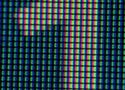
Yes the naming of resolutions is a mess... Couple that with marketing and it becomes misleading quickly.
Lots of interesting tricks in this code base. Gives also a good idea of the shape and tradeoffs of such ports.
Nice algorithm for rendering fonts. Turns out it's not patent encumbered anymore, this is good news.
Wondering how JPEG works? Here is a primer.
Good exploration on how to make grid shaders. It's definitely not a simple problem.
There's something I find fascinating about dithering somehow. Here are more algorithms and approach to compare side by side.