
Clearly a bit US centric but interesting trends nonetheless. We might see some of that reaching Europe (for good and for bad) fairly quickly. At least regarding hybrid work, flexible offices and more asynchronous communication, I've seen it globally spread already.


Nice overview of what it takes to increase your uptime. It can get expensive quickly. This is also a good reminder that it's not only about software, it's a lot about people and administrative constraints as well.
Nice post full of good advises for new (or not so new) managers.
Interesting approach to get a better understanding and awareness of your surroundings as a tech lead or lead dev.

I'm not necessarily convinced by all of those. Still there are interesting ballpark numbers I didn't have on my radar as far as management goes.

Lots of nice advices in the followups. The previous article clearly lead to a good conversation around it.
Note it's not about impostor syndrome, I guess lots of us think we're in this category, that doesn't make it real.
Anyway, from the management point of view this is indeed a baffling situation when you encounter someone like this. What to do? Definitely not always easy, sometimes induced by the organization as well so it would be too easy to blame on the person alone. We need to pay more attention to those and there's clearly no magical recipe to handle them.

Nice (even though a bit long) explanation of the skills needed for a senior software engineers. Definitely a bunch of good advises in there.
Interesting way to frame the potential problems around organizational culture. This indeed influence behaviors quite a bit so should be in check. It also shows it's a complicated problem you don't want to overdo it, freeze the culture in place, and see it used mainly for blaming... it'd effectively turn into a cult.

Definitely this. Having "heroes" brings obscurity and hide the problems, this prevents management from knowing and handling the issues. This also create lots of missed opportunities for collective learning and improvements.

Interesting advises for higher management roles. The information gathering and the distorsion fields are key factors to have in mind to not loose perspective. Otherwise it's when you'll start doing more harm than good.

Interesting, this seems to empirically confirm the Peter Principle, at least in sales. Also shows that companies are trying to workaround it. Dual career ladders seem to be an interesting path for this.

This is definitely a worthy advice with lots of interesting side effects. For me the main motive beyond cheer curiosity is developing more empathy towards others with different roles.

OK, definitely a gutsy move... Still this is an interesting approach for a complex system. Better have a controlled early failure if you can get it, than a complete collapse later on. This might be just the incentive you need for real organizational change.
This is a sound advice, it's better if it's a conversation. Some companies push for that some don't. If they don't the proposed plan is a good one.
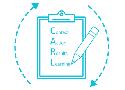
It's coming from the job interview domain... but I wonder if it could be more largely useful due to how simple it is (but not easy mind you). I guess I'll experiment with it for my next project postmortem.

Always a good idea to seek reduction in time spent in meetings. I've seen this being too often a drain. Can get quickly out of control.

It's clearly a choice in management style. For such choices, always keep in mind the trade offs this create, maybe it'll push you to revise your choice.

Like it or not (I'm part of those who don't like it) but the role of manager will necessarily create power imbalances. This article is thus a must read to managers at any level to know how to deal with it properly.
Interesting article. I especially like how it makes the difference between being kind and nice. That honesty is required if you want to be really kind to others. It nicely shows examples on how to apply this (for instance, but not only, in the context of code reviews).