Interesting tips and actions to help frame the conversation. The goal is to get the team better self-organized and directed.



Very good primer on a widespread and very hard to avoid bias. This is why it's hard for projects to properly meet deadlines.
This is a funny pretense, and yet... If any of this remind you of a real context, this would be paper cuts. Have enough of those and indeed the organization might grind to a halt.
Packed with useful information. Clearly some things I'm eager to test in there.

Definitely this. Listen and write down issues before you start to complain. There might be reasons why things are as they are. Take the time to understand them and refine to have a better feedback.

A good reminder that mental health can be hard to keep in check in our profession. Pay attention to how you feel, anxiety is a sneaky foe. Lots can be done to improve if taken care of early enough.

Plenty of good tricks in there. It has to be genuine of course, but said tricks reduce chances of unwillingly dropping the ball on the topic.
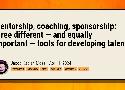
This is a nice way to frame the three activities. They help people progress but in different ways.

A bit US centric at times, but there are some more generally applicable advices in this piece. This can help you navigate in the time of a company reorganization (not always called out as such).

Interesting outcome from those experiments. Interesting insights coming from the practices the companies put in place. The failures also bring interesting information.

A few points to take with a pinch of salt, especially regarding the proposed solutions. Still it makes a very good point that most transformation failures toward agile organizations are due to lack of trust and the swapping of one bureaucracy for another.
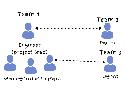
To take with a pinch of salt since it has a couple of biases (most notably it focuses a lot on satisfaction) and the sample size is a bit small. A few interesting insights nonetheless. In particular it hints at autonomy, transparency, technical skills and vision as being the most important factors for satisfaction and success within teams. The applied project management method? Not so important it seems if the other factors are satisfied.
Very comprehensive list of tips and ideas to organize events and get together. Nice for inspiration if you need to organize such a thing.
Definitely this. Managing expectations is a big part of management. It's also important for customer relationship. In both cases, clear communication and finding misunderstandings early are key.
Interesting idea... indeed organizations can carry legacy processes and ideas as well.
Interesting approach when managing at a distance. It tries hard to stay lightweight which is definitely welcome.
This is a bit cartoonish I'd say but there's some truth to it. I indeed regularly get onto consulting gig where you find out that the people already had the solution to their problem. In those cases it's very often because communication channels are broken somewhere (team don't feel at liberty to share what they noticed, managers having a hard time to listen, etc.).
Things don't look great in this giant... it's astonishing how much eroding vision and transparency can hurt an organization.
Interesting idea, why not use similar workflows than to develop software? For sure this would bring more transparency and automation, should help focusing on higher value tasks.
Interesting approach for a manager to give transparency and to clarify expectations.