It's definitely bringing nice moves now. It deserves to be used more indeed.


Neat little summary on the mechanisms to ignore files in Git.
Good first half of the post, there's indeed more paths out of GitHub than jumping from a centralised system to another one (even though Codeberg and Forgejo are much saner from a governance standpoint). We'll see what the future brings.
A single CLI tool for any Git forge? This sounds appealing.

Nice quality of life improvements for the history rewrites. That said, I'm particularly looking forward to the changes in hooks handling, it's always been a pain to deal with in teams, moving them to config should help.
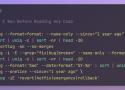
Nice little commands to use to discover quickly the state of a code base... Or rather of its team.
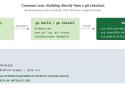
Examples of how i3 and go stamp versions. This is indeed good habits to ease dealing with errors in production.
Interesting trick in Got, using SSH certificates to prove the origin on commits. This feels a bit rough though, tooling has room for improvement.
This looks tempting. I guess I'll try this one instead of pre-commit when I get the chance.
Nice little git trick. We can all thank the CIA I guess?

Looks like that following parts were never written. This piece is interesting by itself though, it's nice to have a record of the early times of SCCS and RCS.
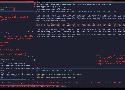
Nice tour of LazyGit. I keep hearing good things about it, I should really try it.
A good reminder that you don't always need a full blown forge.
Git pre-commit hooks indeed bring nice benefits. Like everything else they're not a panacea though.
An old series of posts which highlights quite well why GitFlow can be a problem and that you likely want something simpler. Since I still find GitFlow often recommended as a knee-jerk reaction, this is a good article to have in hand.
Let's see if this gets merged. This could be interesting convenience.
Looking forward to Git LFS going away indeed.
I often tumble on this. The two and three dots notations means different things between git log and git diff. It is a tad annoying.
Cool tip showing what can be done with got bare repositories.
Looks like a very comprehensive resource about Git.