Indeed, the intermediate steps in an animation have to make sense too. Too often we think about the start and end point but miss the quality of the transition.


So many requests based on vanity and hype... I like the question "when you go to other websites do you use it?", we should use it more. Maybe at some point we'll realise that simplicity matters.
Or why I tend to favor desktop applications (made by KDE as much as possible) rather than web applications whenever possible. It's just more pleasant to have things which look and feel homogeneous.
A good piece, well designed too. Shows how demanding our current devices are. So much attention requested and so much complexity the user has to deal with. We clearly lost the plot as an industry.
Excellent historical perspective on how we ended up with applications filled with annoying interruptions and notifications. It's been done indeed one step at a time and lead to poor UX really.
Definitely required more preparation work than brainstorming. That said it's a nice alternative, maybe easier to get right.
Looks like a nice tool for UX design and getting insights from conversations with users.
Kind of ignore the security impact of the needed upgrades, but apart from this I largely agree. Most applications try to push more features in your face nowadays, unneeded notifications and all... this is frankly exhausting the users.
I think this effect is a usability nightmare. That said it's interesting to see which CSS and SVG tricks can be used to simulate it. This opens the door to other effects.

Some good point in there. For sure you don't want to animate everything.

We got many options nowadays. Most of them are likely better than just making the underline disappear on links.
When you realize TDD is about units of behavior... then you can see what can be iterative and what can't in your process. In other word, what is dictated by the problem domain is iterative, what is dictated by system architecture is not. Luckily, the latter is often related to the user experience you're aiming for.

A long essay but contains a lot of interesting insights. There's definitely more to do design wise to produce software people can really bend to their needs.
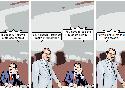
Or how the workflows are badly designed and we're forcing ourselves to adapt to them.

Worth trying indeed. I'd love to see at least some of that widely adopted.
Avoiding them requires some care when designing the page and CSS.
Clearly to really benefit from LLMs there's quite some thinking around UX design to be had. This can't be only chat bots all the way.
Important principles to have in mind for proper UX/UI designs. There are more of course, those are the bare minimum though.
Beautifully crafted post. So much of it is true as well, having several modalities available is better for interactions. We've been loosing this overtime, it's time to reintroduce it... there's so much to do in the HMI space.
It could be so much better indeed. Unfortunately in great part this is about UX design and carrying heavyweight frontend frameworks though...