Another way to approach Architecture Decision Records. A different format to try to foster a more collaborative approach.


A quick summary of the different properties you want in tests. In practice you'll likely have to find a tradeoff among them.
Apparently this needs pointing out but there's more than async/await out there. Sometimes what you want is a simple event loop. Here illustrated in the Rust ecosystem.
Friendly reminder that in C++ that case evolved quite a bit all the way to C++23. Please use the more recent constructs in new code. This definitely leads to better patterns.
Good explanation of an important design pattern as soon as you have remote calls.
Or how it's possible to expose an object-oriented like API for a data oriented framework without sacrificing on performances.
Don't throw estimates out of the window. Keep in mind that the more precise they are the more expensive they become.
This is indeed two sides of the same coin. A good reminder that you need to pick the right approach depending on the context.
Interesting point of view. I'm not sure I fully agree with the classification but it gives something to mull over. For sure the less reliable your estimates the more padding is needed to have some predictability.
Rituals are definitely important... if you understand why you're going though them. If you just "go through the moves" they're failing.
This explains quite well how TDD is made of several cycles of different length.

This is a funny setup. It's not very expensive either.
Seriously... Developers should be ashamed to produce such invasive tools.
I find the title misleading. Still, this is a good exploration of how to treat unwrap() and expect() in Rust code.
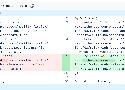
Unicode in source code can come with unwanted consequences. Tooling might be required.

Feels a bit like bad coordination on the Tor project side this one.

This is one of the perks of a strong type system. You can ensure that you don't mess up your units.
It is indeed in a weird state on Linux to say the least. Make sure to follow the links there, they lead to more precise resources.
Or why estimates need to happen in one way or another.

There are indeed cases where you don't want to hurt your reputation...