
It definitely has a point. The code output isn't really what matters. It is necessary at the end, but without the whole process it's worthless and don't empower anyone... It embodies many risks instead. I think my preferred quote in this article is this:
"We are teaching people that they are not worth to have decent, well-made things."



Interesting ways to look at processes and their outcomes. Depending on the mental model you won't ask the same questions when investigating incidents.
Flatpak is at a crossroad I'd say. The project really needs to find a way to move forward.

As LLM assistants get more and more embedded in the development process, it gets harder to ensure they behave safely. Quite a few interesting attack vectors in that one.
Good reminder that refactoring isn't necessarily the end of a cycle. It can also be before you add a feature.
This is indeed an excellent way to understand all the roles and the work behind creating a game.
Nice approach, especially useful if you need to split work to distribute it to threads.

Interesting new proof on the relationships between P and PSPACE. Let's see where this leads.

This is a good rant, I liked it. Lots of very good points in there of course. Again: the area where it's useful is very narrow. I also nails down the consequences of a profession going full in with those tools.
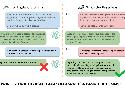
Those hosted models really exhibit weird biases... The control of the context is really key.

That's a good overview of the energy demand, it doesn't account for all the resources needed of course. Now of course like most articles and studies on the topic, it's very inaccurate because of the opacity from the major providers in that space. The only thing we know is that the numbers here are likely conservative and the real impact higher. Mass use of those models inferences is already becoming a problem, and it's bound to get worse.
Somehow not surprising... There's an area where it works OK. That said, I think we don't have the right UX to exploit it safely and productively. The right practices still need to be found. This isn't helped by all the hype and crazy announcements.

Nice little interview showing what's brewing in the Qt project and how the relationship with KDE is important.
Or why it's hard to truly evaluate performance in complex systems. We often test things in the optimistic case.
Nice in depth article on how to run particle simulations using WebGPU. This one has a very life like rendering.

There are options indeed. Some of them can be maybe surprising. It of course depends the type of game you're making.
If the funding dries up... we'll have another AI winter on our hands indeed.

Another trick in Rust to avoid unwrap() calls. The let-else option is indeed particularly elegant.
Or how the current neural networks obsession is poisoning scientific fields. There was already a reproducibility crisis going on and it looks like it's been getting worse. The incentives are clearly wrong and that shows.
You can't be in the backseat when using those tools. Otherwise you might feel productive by cranking out code but it can't do the essential tasks for you (most notably actual problem solving or architecture thinking). The quality would clearly suffer.