
On the importance of invariants and consistent requirements in our trade. Admittedly it's a long demonstration but it show the point well.


A response to "The Hunt for the Missing Data Type" article. There are indeed potential solutions, but they're not really used/usable in the industry right now. Maybe tomorrow.
Indeed, graphs are peculiar beasts. When dealing with graph related problems there are so many choices to make that it's hard or impossible to come up with a generic solution.
Interesting exploration of what could be done in a 3D engine using plane-based geometric algebra (PGA). This brings in nice properties that matrices don't have. And the performance impact is apparently not as bad as one could have suspected. I definitely look more into it.
Neat article about colorspaces. Definitely worth reading if you're curious about the topic. It also has interactive bits to ease the understanding.
Or how calculus can give a feel of why approximation errors can be great or small with floats.
Some reasons why Python and C behave differently on this matter. It's a source of mistakes.
Interesting explanation of the method of differences to easily compute polynomials.
Wonder how to implement such real-time simulations? This is a good summary of all the math involved. Also comes with code snippets and demos.
Probably the definitive resource on how floating-point arithmetic works.
Another nice introduction to raymarching. I still find this a very interesting rendering approach. It's really cool what you can do with those Signed Distance Fields functions.
A nice reminder that the π value is not as set in stone as we tend to believe. It depends on the metrics we're using.
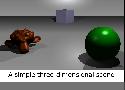
Good introduction and advocacy for transform matrices. I often see people struggling with them but they're definitely worth mastering.

Wanna get started playing with shaders? This is a neat into leading to a blob made of metaballs.

On specialized and formalized domains like this it might lead to something interesting. That said there's a tension with the fact that it doesn't know when it doesn't know which might be problematic. Also I wonder how it fares compared to computational models like WolframAlpha. In the end very formal domains like this have large knowledge bases already available.
A good proof that it's still possible to innovate with interesting performance gains for rather mundane tasks. If you're into calendars this is an interesting read.
Nice introduction to domain repetitions. A fascinating concept (IMHO) very much used in procedurally generated content.
If you want to know more about how to use mirror balls to create environment maps, this is a good resource.
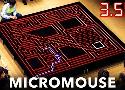
The fascinating world of micromice competitions. There's a lot of thinking leading to those really smart designs.
This really looks like a nice library for symbolic maths. Keep in mind it's python based but it goes all the way to generating solutions to the given problem in various languages.