OK, the concept if really mind bending. The tech behind it is really interesting.


Nice explanation on the options for anti-aliasing when rendering using SDFs
I always find interesting how several math domains have similarities and bridges between them. Here it's about the ties between polynomials multiplications and convolution sums.
Nice explanation of everything you need to simulate to make a realistic car simulation in a game.
Good reminder of all the nice animations you can do with a few dots and a couple of simple equations.
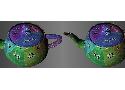
Wow, very smart approach to solve discontinuity issues when quads are turned into triangles.
Interesting endeavor... this is nice to have an attempt at a formal definition with no axiom introduced.
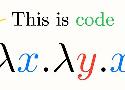
A neat little introduction to an important field in computer science. Lambda calculus is often too little known but it has very important ramifications in several fields.
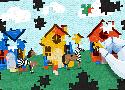
When you put the marketing claims aside, the limitations of those models become obvious. This is important, only finding the root cause of those limitations can give a chance to find a solution to then.

Really cool procedural environment generation.
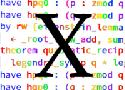
Looks like we're still a long way from mathematical accuracy with the current generation of models. It made progress of course.
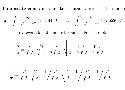
Interesting thread. I didn't know about this family of constants. Fun stuff.
Ever wondered how to simulate 3D from 2D based primitives? Here is a nice experiment explaining how to approach it.
Of course I recommend reading the actual research paper. This article is a good summary of the consequences though. LLMs definitely can't be trusted with formal reasoning including basic maths. This is a flaw in the way they are built, the bath forward is likely merging symbolic and sub-symbolic approaches.

This is a short article summarizing a research paper at the surface level. It is clearly the last nail in the coffin for the generative AI grand marketing claims. Of course, I recommend reading the actual research paper (link at the end) but if you prefer this very short form, here it is. It's clearly time to go back to the initial goals of the AI field: understanding cognition. The latest industrial trends tend to confuse too much the map with the territory.
Need to know if two shapes overlap? Good explanation of an elegant algorithm to do it.
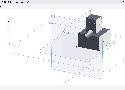
This gives a good idea of the important parts in a CAD program. It also list a few of the usable libraries to build one such program in the browser.
Funny experiment playing with the frequency domain and the spatial domain of an image. This gives unintuitive results for sure.

Very cool BSDF. Should lead to better diffraction rendering in real-time 3D.
I didn't know this book. It is written in a surprising style, but it's very much down to earth and to the point. For sure a good way to learn calculus.