
Everyone makes mistakes, what matters is how you handle them.


I used to do that, fell into the "taking notes on the computer". And clearly it's not the same, I'm thinking going back to paper notebooks soon.
Interesting insight. Gives a lot to ponder indeed. Focusing on technical debt alone probably won't improve a project much. It's thus important to take a broader view for long lasting improvements.
Nice advice, there's a lot of variation on the role. And yet, some things seem to always be there.
This is a good overview of what the Staff Engineer can be. There's of course a lot of variation depending on time, priorities and the culture of the organisation.
This is good advice. To improve your organisation, focus only on the biggest constraint. Otherwise you'll quickly be spread thin.
Some areas of our industry are more prone to the "fashion of the day" madness than others. Still there's indeed some potential decay in what we learn, what matters is finding and focusing on what will last.
An old one and a bit all over the place. Still, plenty of interesting advice and insights.

Interesting thinking, indeed expectations are changing quite a bit for engineering managers over time. Thus the proposed list of core and growth skills is interesting. It is likely a good framing for the job, then the art is finding the right balance for your organisation.
I'm not really a fan of the leaderboard part of their approach. That said, if the maturity of the organisation allows it, having such bug squashing sessions is a good idea.
Definitely this. It's a good reminder of the boy scout rule. It's fine to clean up as you go and when you find the opportunity.
I like the approach. Indeed what matters is to have visibility, don't weaponize measurement otherwise the trust will falter.
I'm not fully aligned with all of this article. That said, it's an interesting way to frame the topic of how we're having to make tradeoffs all the time.

Nice list of templates to use for better handling of engineering management in your organisation. Pick, choose and adapt what makes sense to the context.
I like this article. Indeed, focus on building organisations and teams where it's easy to do the right thing bit hard to fail. This is much better than obsessing over mythical 10x engineers.
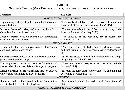
Interesting findings about procrastination. Some effects were expected, others less so. The actions to avoid it in teams should be well known now.
Looks like a good approach to integrate LLMs in your development workflow. In case that would become something trustable.
Interesting ways to look at processes and their outcomes. Depending on the mental model you won't ask the same questions when investigating incidents.
You can't be in the backseat when using those tools. Otherwise you might feel productive by cranking out code but it can't do the essential tasks for you (most notably actual problem solving or architecture thinking). The quality would clearly suffer.

Or why it's important to deeply understand what you do and what you use. Cranking features and throwing code to the wall until it sticks will never lead to good engineering. Even if it's abstractions all the way, it's for convenience but don't treat them as black boxes.
Interestingly this article draws a parallel with organizations too. Isn't having very siloed teams the same as treating abstractions as black boxes?
Quite some food for thought here.