
Excellent conclusion to the recent turmoil around undefined behaviors. The way they are currently used as definitely a problem, they shouldn't be ignored in your code (although that's admittedly not that easy). There's hopefully a path forward.


A few interesting points in there. Too much hype and important points are glanced over, we'd all benefit from them being more actively explored.
An interesting but sometimes forgotten possibility for extending SQLite. Keep in mind this can lead to bad coupling between the software and the DB though which could carry interesting challenges around upgrades for instance.
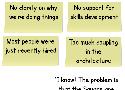
OK, this is the best critique of the "Spotify Model" I've seen around. There's been plenty of unfair criticism thrown at this "model" (never aimed to be something you fully replicate though, hence the complaints I think). This one is properly balanced and doesn't just throw everything in the garbage bin, it takes the model bits by bits and try to highlight where the limits are. Very constructive.
Very nice summary of the architecture in the latest trend of transformer models. Long but comprehensive, a good way to start diving in the topic.
It seems this isn't necessary after all. At most if you like it you can put the year of creation of the copyrighted content, but the range and bumping it really isn't necessary.
Looks like an interesting (even though young) tool to make your own linters and to analyze code source.

Looks like an interesting tool to deal with dependencies in some tests.
Such generative models are getting more and more accessible. You can play with them using a few lines of python now.

A very neat 3D experiment in the browser. The 3D abilities in this context made a lot of progress lately.
Interesting points about agile and lean approaches. In my view they tend to complete each other, that said the diagnostic of Scrum as practiced in most places today is not Agile is very true. So beware about what you're doing, is it folklore? is it dogmatic? or do you really apply values and principles?
This is an interesting new family of hardware. Definitely to keep an eye on for homelabs.
Nice primer on std::variant. Covers all the bases of how to use it properly.
Yes, streaming isn't forever... it's getting clear lately. That's why I still have CDs of the music I really like.
I'm not in full agreement with the content, mostly the social media bit. The following your curiosity on the other hand... definitely spot on.
That's really a massive leak again! The amount of personal data in the wild... will likely help with identity theft too.
Really amazing pictures! All this life we usually can't see with our own eye.

That's an "interesting" leak, both for how it happens and what it contains. I shows serious biases in the "no fly list" used by airlines.
Problems with integers now. Kind of better known usually, still to keep in mind as well.

The human labor behind AI training is still on going. This is clearly gruesome and sent over to other countries... ignoring the price for a minute this is also a good way to hide its consequences I guess.