Funny experiment. If you're a Linux user pondering going back to Windows it'll likely cure you. Goodness the install experience is abysmal and that's just the beginning of the troubles. Of course it has a good side as well but it feels fairly limited.



Looks like an important Wine 11. Well done to them!
Indeed, it looks like Windows gave up on having a nice experience for native app development a while ago...

Ever wondered about how Windows 3 was architectured? This is an interesting read. It was really complex though, you can really tell it's in the middle of several transitions.
Or why competitive multiplayer games which anti-cheat probably will never make it to Linux. I'm not into this kind of games but this is an interesting piece on comparing the differences between the Linux and Windows kernels. It also show that with some care from the game developers, those anti-cheats might not be necessary in the first place.
Interesting exploration of the NT design compared to Unix. There was less legacy to carry around which explains some of the choices which could be made. In practice similarities abound.
This is indeed surprising behavior and specific to Windows. If you wonder why TCP connect is slow and you got IPv6 support active this might be why.
The cleanup of that mess is still on-going. A bit more automation would help.

This is completely nuts... they really want to unleash a security and privacy nightmare. The irony is that it does respect DRM content on the other hand, we can see where the priorities are.
An old article, but a fascinating read. This gives a good account on the evolution of POSIX and Win32. The differences in design and approaches are covered. Very much recommended.
Confused about which UI frameworks are used in Windows? Here is the list in chronological order.

Looks like Microsoft is really catching up fast for its surveillance apparatus to be on par with Google and Meta.

Microsoft doing Microsoft things in Windows... unsurprising, will never end. Maybe at some point people will move to platforms they really have control on?

Definitely complicated to identify and resolve paths on this platform. I had to deal with it from time to time and this can definitely turn into a pain in the neck.
Very complicated software. If you ever wondered how it works. Now you know.
OK, it's 2022 and this is still not an adequate ecosystem for system programming.
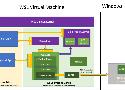
Interesting integration of Wayland in WSL.

Fascinating attack vector. It was just a matter of time I guess, the more you use blurry frontiers (be it between OSes or other important domains) the more opportunities for exploits show up.
If it wasn't clear that Microsoft never abandoned it's Palladium plans but merely went for a detour after the backslash... now it's getting very clear with Windows 11. They're clearly back at it and this could become a problem to install something else than Windows on PCs...
Interesting exploration on the amount of legacy a platform can accumulate over time.