Not what I signed up for years ago, but it's the political and social landscape we inherited... Surveillance is being on steroids now, so definitely need to fight it at every turn.


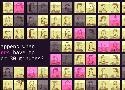
Nice visualization of a study where people are paired with strangers for a 30 minutes conversation. It's a fascinating social experiment with neat outcomes.
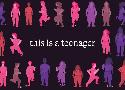
Excellent visualization which shows how adverse experiences during childhood shape our lives as adults.
Despite understandable limitations, this studies has a few interesting findings on how communities can more easily switch platforms (in this case from Twitter to Mastodon). At least one is a bit counter-intuitive.
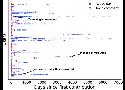
Very interesting study, shows how toxic comments impact contributions. Gives a good idea of the probability for people to leave. In the case of Wikipedia this highlights reasons which contribute to the lack of diversity in the contributors. This is a complex community issue in general, this studies does a good thing by shedding some light on the dynamics in the case of Wikipedia.

Definitely this. When polling the questions shouldn't be too obvious, otherwise people will tell you what you want to hear.
Early days for this type of research so a couple of limitations to keep in mind while reading this paper. Most notably: rather small sample explored (it's a qualitative study) and tends to conflate GitHub with "the Open Source community". The later especially matters since the vibe can be very different outside of GitHub.
That being said, very interesting findings in there. Some validate my experience with GitHub. It's clear that compared to other spaces there's much more entitlement behavior from some people. Interestingly the words seem on average less violent (although it does happen of course) than in other platforms... still this is important to keep in check since it could have implication toward prospective contributors.
The last point in their discussion section is promising. Some of the current manual interventions from maintainers seem to have good results (encouraging) and it seems possible to at least semi-automate the handling of toxic comments which could help with maintainers well-being.
Interesting (although unsurprising) study (I advise looking at the actual paper) about the links between social media and well being. Of course it has a couple of weaknesses, we need more such studies to grow the numbers and reduce the biases.
You think you don't use power on others? Think again, this can be more subtle than you think. Keep it in mind, be mindful and try to use your advantages fairly.

Fascinating account on mental models and then statistical power
It starts with how a flawed mental model (coming from Facebook's founder) about identity and social role became imposed on others.
Then it continues on the mental model we tend to apply to vaccines. That shows again how bad we are at intuitively grasping statistics and their application. They do require an effort even when you're trained at them.