The slippery slop seems clear... If you start generating a bit you'll be pushed to loose full control in the end. Do you think you can learn this way? Improve? I doubt it.


Very nice read about quality in general and why it's really hard to define. It also explores how it can degrade over time in existing products.
Good point. The metaphors we use have obviously some limits. In the case of the "sinking ship" when used for software it doesn't quite work as there's no bottom...
I like this article somehow. Indeed I'd like to see more guilt in the people shipping bugs in production (myself included probably). Also I'm very much aligned with the proposed approach to tame issues: thinking, types, tests, and telemetry.
Wondering how that works when it runs properly? Here is an example of a Kaizen board in a japanese factory.
Good check list of things to consider when you're delegating something. It's pretty much the expectations from the person who delegate to you.
Indeed, when people say "users don't care about quality" (tests or otherwise), this is mostly folklore. As soon as something goes wrong they'll care.
Very nice piece, timely and needed. Indeed, let's hope people stick to those principles.
Indeed, if the rsync maintainer can't handle a coding assistant properly... who can?
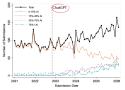
As if research wasn't already having a quality problem in submitted papers... now thanks to people jumping on LLMs to churn out papers faster, this quality is cratering.

This is concerning, hopefully the amount of issues which get through will be limited.
This looks tempting. I guess I'll try this one instead of pre-commit when I get the chance.
Is Norway about to become one of the first countries to become serious about enshittification? Will more follow? This would be welcome.

Is this really to improve your work? Or make you dependent? In the end it might be the user which looses.

There is a real question about the training data used for the coding assistant models. It's been a problem from the start raising ethical concerns, now it shows up with a different symptom.
The definition of legacy code is ambiguous enough. We generally mean "bad code" (the wrong definition to me...). What about seeing things differently and trying to leave a great legacy behind us?
This is very true. It's not like whoever produced bad code is particularly stupid, in most cases it's the context around which breaks the people.
A good list of characteristics to aim for. Gives clue about the quality of your software architecture.
This is something I've definitely seen indeed. There are clearly a threshold effect in the amount of code you have to manage. Solutions working at smaller amounts don't work anymore a couple of order of magnitudes higher, and vice versa.
There's a balance to strike on quality. Too much or too little and you won't be able to progress towards the user needs.