
Some of it is probably a bit too cynical (often the case with this author), and yet it has good advice on how software engineers influence the organisation around them.


Knowledge management is hard. It's almost never a tool problem despite what people claim.
This feels a bit too realistic for my taste... and yet... Well this piece of satire is well crafted I'd say.
A bit of a stretched metaphor in here, but indeed being individually faster doesn't automatically make the team faster. Sometimes quite the contrary in fact.

Interesting insights, or how listening helps finding risk or making sure delegation will go well. It's indeed also a good illustration that story telling works often betterthan explaining abstract concepts.

Architecture work is not only technical, you need processes to put the architecture of a project in place. That said, you can make things easier with standards to smooth the path toward the preferred types of architectures in your organisation.

Clearly, any endeavour which has to scale will need some form of bureaucracy to stay afloat. The art is keeping it to a minimal before it starts to be an end in itself.

Indeed, architecture work is not only technical (what is really?). You definitely need to account for the organisation and the process to actually put the architecture in place. It's not just about having pretty pictures.

Cryptic title to be honest. But this is a good explanation of why any "agile transformation" better start close to the code and in particular with automated tests. If you can crack that nut (and it take time), the rest will follow naturally.

So much this... There are so many organisational problems that churning code faster is likely not what you need. When did we start to obsess with the number of lines of code?
Lots of good insights in here. Of course YMMV and some definitely depends on your context. That's a lot of dimensions to keep in mind though.

Definitely makes sense, you can be more innovative in your practices and processes than with the tech your depend on. The cost of changing is definitely not the same.

Interesting model for bringing architectural and organisational changes. This is indeed at least in part political games... so you need some political capital to spend.

Interesting framework of different leadership styles. They all come with their own pros and cons of course.
Interesting point, there are indeed different types of "debt" in the systems we build. It likely help to be more precise about their nature, and indeed assisted coding might help grow a particular kind of debt.
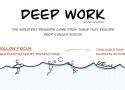
Quite some good tips in there. If you want to do deep work you need to arrange your organisation for it. Using asynchronous communication more is also key in my opinion.
Everyone makes mistakes, what matters is how you handle them.
Interesting insight. Gives a lot to ponder indeed. Focusing on technical debt alone probably won't improve a project much. It's thus important to take a broader view for long lasting improvements.

Solving paper cuts pay off faster than you'd think.

The complexity and cost in organisations is indeed mostly about coordination. This is a difficult problem and largely unsolved in fact.