The never ending debate on the tools used to produce free software. Of course, in general those tools should be free software as well (IMHO).


This is a welcome and necessary clarification. Now there is a court decision clarifying what using the "Commons Clause" mean.
Interesting piece which points out (despite its title) that it's not simply about funding, this is also about the relationship between projects and large companies which try to squeeze value out of them.
The never ending question of how to monetize open source...

Happy birthday indeed! 25 years already! Still young, lots more to come.

More details coming out about the .NET Foundation drama. This indeed looks bad and concerning regarding the stewardship of this foundation.
Obviously I strongly agree with this. Participating in code reviews of free software components is a great way to improve. This applies to being a reviewer, submitting code and skimming other reviews.

OK, this is actually a very big deal. I think it's the first AAA game 3D engine which gets open sourced. This could be very impactful to the industry.

Obviously I'm convinced it's necessary for students to learn how to contribute as soon as possible. That being said, this leave unanswered the very important question of not burning out project maintainers. Indeed, it needs to be structured in some way, most projects can't cope up with swarm of students dropping potential contributions on them.

Interesting product, and it's fully Open Source, even the hardware.
Interesting move, sounds like a much better path than the SSPL one.

EN: Great interview from one of the designers very involved with Framasoft. She's doing an excellent job at framing what UX design really is and highlighting some of the problems in the Free Software community.
FR: Excellente interview d'une designer très investie dans Framasoft. Elle fait un excellent boulot à expliquer ce qu'est réellement le UX design et à pointer certains des problèmes avec la communauté du Logiciel Libre.

Very interesting FOSDEM talk which I see as part of the debate about "Open Source as just licenses"/"Post Open Source". This shows very well how the OSD is very narrow and that their should be a better alignment between what is labelled FOSS and the actual customs. This is something which licenses alone can't capture.
EN: This is a bit of a less rigorous counterpoint of the paper from Nathan Schneider "the tyranny of openness". I think it's interesting to see that despite a few strawmen it reaches a somewhat similar conclusion: it's not just about licenses, it's also about customs".
FR: Un contrepoint moins rigoureux au papier de Nathan Schneider "the tyranny of openness". Je trouve intéressant de voir que malgré quelques "hommes de paille" il arrive à une conclusion un peu similaire: ce n'est pas simplement a propos des licences, c'est aussi à propos des mœurs.

You know a thing or two about contributing for FOSS? You'd like that knowledge to be passed on? Here is your chance with that MOOC in development.
This is a great paper. Truly mind bending in my opinion. In my case it helped me pinpoint things in the FOSS movement which I felt were there while being unable to clearly explain them. This is a clear enabler and explains why we need to move beyond the "licensing and only licensing" position the FOSS movement is in, it's the only chance to finally encompass ethics and economics which are both very much needed. It's the only chance to converge toward proper commons without the faked meritocracy distortion.
I could go on much longer... but it's not the point here. Go read it!
And if you're still wondering "why not more women in the FOSS movement?" or "why are women mostly in community stewardship roles?", well there are answers for that too.
I'll close with two quotes which I found really important in that paper:
"Ehmke stresses that information ethics and social ethics need not be mutually exclusive but that they should coexist. She frequently celebrates what Open Source has achieved through information freedoms and hopes for more through the addition of social ethics. [...] Yet this evolution means being open in new ways and more closed in others."
""The frame of social provisioning reveals how the unrest in Open Source emerges from a cluster of basic concerns that peer production communities have taught themselves to treat as invisible or inadmissible. It remains to be seen whether Open Source can stretch to incorporate more of its participants’ humanity."
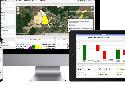
EN: Very nice to see some initiative toward providing Free Software for agriculture use. I have some concerns regarding the type of agriculture which will use this though.
FR: Vraiment bien de voir des offres de Logiciel Libre pour un usage dans l'agriculture. J'ai quand même quelques réserves concernant le type d'agriculture dont il s'agit.
FR: Pour une fois un pas positif que la création de cette mission. Cela va dans le bon sens en espérant que cela soit respecté par ailleurs.
EN: For once a step in the right direction the creation of this mission. It goes in the right direction indeed but let's hope it'll be respected.

Very interesting approach using code of conducts to fill the gaps of the pure license approach limitations. Indeed focusing on licenses only lead to the Open Source movement which is so much business oriented that ethics is completely overcome (there's so much you can do with licenses after all). This proposals using code of conducts (internal + external) is thus interesting to make proper commons. The question of how much of a deterrent and defensible from free loaders this could be is still open though.
Interesting take on why the Open Source movement is a zombie movement and why Free Software failed at the political level. This explains why we see a rise in the "Post-Open Source" term. This leads to potential ways out. It's a bit too much on the heavy marxist reading to my taste but otherwise it contains good criticism