This is an easy trap to fall into unfortunately. Be mindful of your own biases. They might increase as you gain more expertise in a field unfortunately.


Interesting study which measures our propensity to be more confident while being more wrong when using LLMs to answer questions. Those models really tap into our cognitive bias to mistake linguistic fluency for competence.

So using personal names is not an inherently human trait, this is confirmed through research now. Before their were signs and suspicions, but now the trail of evidences is strong.
Interesting paper (go to the full one for all the details) which shows that with the current architecture it's really hard if not impossible to make safe systems with LLMs. This gives interesting insights in the weird form of proto-cognition those models exhibit.

This is clearly the Ouroboros moment in our industry. People pushing for such restructuring and layoffs are drinking the kool-aid and will ultimately be responsible for killing what put them there in the first place.

It feels like it's supercharging an old bias... We tend to confuse confidence for competence.
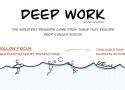
Quite some good tips in there. If you want to do deep work you need to arrange your organisation for it. Using asynchronous communication more is also key in my opinion.
I used to do that, fell into the "taking notes on the computer". And clearly it's not the same, I'm thinking going back to paper notebooks soon.
Unsurprisingly the news ain't good on the front of social media and short form videos. Better stay clear of those.

Interesting essay... Indeed not everyone think or learn in the same way or at the same speed. It's not the end of the world though, you tend to develop different strengths or weaknesses due to this.
OK, this is a serious and long paper. It shows quite well how over reliance on ChatGPT during the learning phase on some topics impacts people. It's mesurable both from their behavior and through EEG. Of course, it'd require more such studies with larger groups. Still those early signs are concerning.
A nice followup which acts as a TL;DR for the previous piece which was fairly long indeed.
An excellent piece which explains well why the current "debate" is rotten to the core. There's no good way to engage with those tools without reinforcing some biases. Once the hype cycle is over we have a chance at proper research on the impacts... unfortunately it's not happening now when it's badly needed.

A personal experience which led to not using ChatGPT anymore. This kind of validates other papers on cognitive decline, the added value is in how it makes it more personal and concrete.
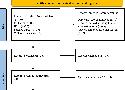
Somehow I missed this paper last year. Interesting review of studies on the use of gen AI chat systems in learning and research environments. The amount of ethical issues is non negligible as one would expect. It also confirms the negative impact of using those tools on cognitive abilities. More concerning is the creation of a subtle vicious circle as highlighted by this quote: "regular utilization of dialogue systems is linked to a decline in abilities of cognitive abilities, a diminished capacity for information retention, and an increased reliance on these systems for information".
Important principles to have in mind for proper UX/UI designs. There are more of course, those are the bare minimum though.
The "asleep at the wheel" effect is real with such tools. The consequences can be dire in quite a few fields. Here is a good illustration with OSINT.
Nice video which gives a glimpse on how our brain constantly tries to build a coherent picture of the reality around us. This is quite a feat since our senses are ill equipped to produce such a picture. Of course we don't even notice all those processes when we go about our days.
I like this kind of research as it also says something about our own cognition. The results comparing two models and improving them are fascinating.
Interesting study even though it bears some important limitations. Still it seems to indicate that one shouldn't rest on its laurels and keep practicing cognitive skills even when older (actually might have to get started in the 20s latest).