Interesting progress on safe type casting in Rust. This should bring nice zero copy parsing of binary data in some cases.


Indeed, those are fundamental traits to make sure you learn and make progress on your journey.
Ever wondered how to simulate 3D from 2D based primitives? Here is a nice experiment explaining how to approach it.
Looks like a very interesting Python library to build interactive 3d visualizations.

This is accurate in my opinion. Engineering and product teams need to properly negotiate, otherwise quality will suffer.
Nice technique for automating the verification of SSH host keys. It'd be nice to see wider adoption.
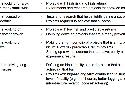
Interesting guidelines idea to help teams manage the priorities themselves. It's written in the context of a product manager but I think it is lightweight and generic enough to apply in other contexts.

This is what you get by making bots spewing text based on statistics without a proper knowledge base behind it.

I very much agree with this. The relationship between developers and their frameworks is rarely healthy. I think the author misses an important advice though: read the code of your frameworks. When stuck invest sometime stepping into the frameworks with the debugger. Developers too often treat those as a black box.

A very useful but indeed little known feature of Firefox bookmarks.

More marketing announcement than real research paper. Still it's nice to see smaller models being optimized to run on mobile devices. This will get interesting when it's all local first and coupled to symbolic approaches.

uv keeps showing promise to make development easier. It makes everything very much self contained.
Good reminder that /tmp has many security flaws built in.
Definitely a sound advice. You don't want to be confused when debugging something because it looks too much like a variable or a property name.
Definitely the most important skill to develop. Especially in our profession.

Lots of open questions which are left unanswered. That said it shows how difficult it is to evaluate knowledge workers in general and that we're often grasping to the wrong metrics.
This is indeed telling unfortunately. It's kind of ironic that they felt the need of having their own debloat scripts.

This is still an important step with LLM. It's not because the models are huge that tokenizers disappeared or that you don't need to clean up your data.
Another nice list of defaults for SQLite. Some of them I didn't have on my radar.
Using the right metaphors will definitely help with the conversation in our industry around AI. This proposal is an interesting one.