
Very nice piece. This is indeed mostly about building organizational knowledge. If someone leaves a project that person better not be alone to ensure some continuity... lost knowledge is very hard to piece back together.


The Web standards are indeed too complex. That severely limits the possibility of browser engine incumbents. I agree there's a deeper lesson here about the scale of technologies.

Or why making a dent in the enterprise software space is hard for FOSS... The good news is, it'd require setting up whole ecosystems of services.
Looks like a nice tool for a simple management of your project specific secrets.
Or why you shouldn't insert an abstraction just for the sake of it. Also clearly not all abstractions are created equal.
This highlights quite well the limits of the models used in LLMs.
Nice little introduction to the ELF format.
It's a not niche indeed but has its place in some applications.
Price of such gear definitely went down indeed.
This is definitely an overlooked alternative to websockets. It doesn't apply everywhere of course but when it does it's a good pick.

Looks like we're still a long way from mathematical accuracy with the current generation of models. It made progress of course.
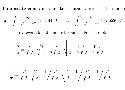
Interesting thread. I didn't know about this family of constants. Fun stuff.

OK, this is a nice parabole. I admit I enjoyed it.

Struggling with making your first technical roadmap? Driving it from measurable problems is a good first step.
You love artists and their music? You probably should get off Spotify then... because they're clearly at war to reduce even further how much they pay artists. Clearly it's not about discovering artists anymore, it's about pumping cheap stock music to increase their margin. Also its clear the remaining musicians trapped in that system will be automated away soon... you don't need humans to create soulless music.

It looks like it's not only impacting negatively our privacy. The linked paper (good to read as well) hints at negative impacts on mental health as well. Still needs to be fully validated but it doesn't look good already.
There is some good advice in this piece. If you want to maintain something for a long time, some aspects need to be thought out from the beginning.
A good reason to use more modern C++20 APIs for parsing code.
Nice move from the home assistant people. Such open and privacy respecting hardware is needed.
One of my favorite of the traditional design patterns in object oriented languages. Now obviously when you get pattern matching in your language... you don't need the visitor pattern anymore.