Looks like a very powerful tool for debugging and analyzing processes involving a Python interpreter.


OK, that looks like an interesting idea for the frontend bits if your stack is mainly Python based. Still very young though.
Celery is a popular solution for job queues in the Python world... it's far from perfect though. This list of fixes to make it safer to use is welcome if you're stuck with it.
This will hopefully solve most of the oddities in the generic types syntax of Python. Will be available with CPython 3.12 and will need support from type checkers of course.
Nice list of patterns leveraging the Python type hints for richer and safer interfaces.
Very early days and still hackish to use but that's definitely big news for the Python ecosystem.

Good primer on Python properties. Opens the door to lower level mechanisms in the language.
It points out the security risk but it's mainly a good explanation on how Python loads modules.

Looks like a promising linting tool for Python. Feature packed and faster than most other options out there.

Looks like an interesting new building block to publish data visualizations.
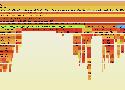
Nice walk through for a use of PyO3 to make some Python code much faster. Nice to see how useful py-spy turn out to be in such scenarii as well.
This really looks like a nice library for symbolic maths. Keep in mind it's python based but it goes all the way to generating solutions to the given problem in various languages.
Another impressive feat from the people behind the Cosmopolitan project. A self contained and portable binary which run your Django application on almost any platform? Apparently doable. The versions used for the dependencies are a bit old but that's clearly something which will be solved soon.
perf now available also to Python programs. This definitely can be useful for proper profiling.
A bit of a sarcastic tone but a few good point in there. Also shows interesting alternatives to C++ to squeeze every ounce of performance out of your code whatever the platform it runs on. Of the three options explored I knew only about Numba really.
This is clearly a dangerous pitfall in the asyncio API.
Early days but could become an interesting alternative to Lua for an embedded scripting language in some projects.
This is a big milestone reached for that project. Let's hope it'll drive adoption up.
Yes... python packaging is a mess. I wonder when it'll get properly unified and get a proper single tool and workflow.
This is apparently a somewhat common mistake. Something is apparently not easy enough to handle and error prone.