I'm not sure the legal case is completely lost even though chances are slim. The arguments here are worth mulling over though. There's really an ethical factor to consider.



Friendly reminder that securing APIs and secrets is a must. Not doing so can have really bad consequences.

This is a welcome development at the W3C. Let's hope this working group will bring good things and stewardship for the related standards.
They'll do anything to further their grip on tech. The European Union is sleep walking on this one.
This is good advice. To improve your organisation, focus only on the biggest constraint. Otherwise you'll quickly be spread thin.
Interesting points. Forums are clearly not good replacements for mailing lists. They might be a good complementary to mailing lists but both have very different affordances.

I agree with this so much. It's another one of those I feel I could have written. I have a hard time thinking I could use the current crop of "inference as a service" while they carry so many ethical issues.
There's a lot of this. Learning different languages to get out of your habits definitely brings compound benefits.
Long and good walkthrough on how to render nice clouds in real time.

Is this really to improve your work? Or make you dependent? In the end it might be the user which looses.
OK, this is definitely a very cool hack. It can definitely help to debug locally.
This is a very rich article. There's indeed more and more a rift between Open Source projects used by hyperscalers and the ones used by smaller businesses and individuals. You likely want to aim for the latter.
Looks like the trend continues. Let's hope the Linux desktop user base will keep growing this year.

If you needed a reminder about why you can't trust WhatsApp, this is a good explanation.
There are growing concerns regarding the Rust supply chain. It's still time to address them but it's became important to tackle this area.
What's the right way to manipulate secrets in your shell to avoid leakage? The answer definitely varies, here is the paranoid version.
Wondering where Markdown is coming from and how it became such a success? The piece helps answer those questions.

There is a real question about the training data used for the coding assistant models. It's been a problem from the start raising ethical concerns, now it shows up with a different symptom.
Go and get your voice heard! This is important matter, especially if you're interested in Free Software.
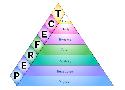
This is an interesting way to frame where the effort should be spent in code reviews.