Nice post explaining the need of ACPI or Device Tree and how they are leveraged by kernels.


Nice performance comparison of file handling in multithreaded context. It's surprising how slow MacOS seems to be there.
Interesting comparison. Ada doesn't fare as good as I'd have expected as soon as pointers are in the mix... but there is a twist, you can go a very long way without pointers in Ada.
A harsh reminder that getenv is not thread safe...
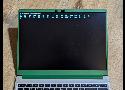
Nice experiment in minimalism. It's nice to see we can still build tiny systems like that.

Interesting article. There's clearly space for both languages indeed. They'll end up having each their own ecological niches, probably with some overlap.
This is definitely a neat trick. This way you can flush stdout regularly without modifying the code of a command.
Nice little introduction to the ELF format.
Interesting explanation of a research paper exploring the possibility of a faster SQLite by focusing on async I/O.
Good post about the very much overlooked fact that lots of command buffer internally when their output is not a TTY.
The title says it all. This is very fragmented and there are several options to fulfill the task. Knowing the tradeoffs can be handy.
Indeed, we should likely revisit what we put in our PATH environment variable. Some of it is old cruft which is now unnecessary.

Nice results. Interesting implementation too. I wonder if some of it will make its way to the glibc or musl.
Wondering what io_uring is for? This is a good explanation.
Interesting exploration of the NT design compared to Unix. There was less legacy to carry around which explains some of the choices which could be made. In practice similarities abound.
Good reminder of what OS threads entails and why they can't be optimized much further. There's so much you can do properly in userland.
Looks like GRUB days as the standard bootloader are counted. Booting straight using the Linux kernel could bring interesting benefits.
Interesting approach to test system changes. Especially welcome on immutable systems.
It's really a good reminder of how powerful ptrace is. You can nicely intercept and change the behavior of syscalls with it.
From the perspective of a given implementation. Still this is a good list of what POSIX 2024 changes. I'm particularly interested to see that per-file-descriptor advisory locks finally made it to the standard. Still some progress to make in this department but it's a good step already.