
Maybe at some point the big providers will get the message and their scrapers will finally respect robots.txt? Let's hope so.


Good perspective on how the generative AI space evolved in 2024. There are good news and more concerning ones in there. We'll see what 2025 brings.

OK, this is a nice parabole. I admit I enjoyed it.
A good balanced post on the topic. Maybe we'll finally see a resurgence of real research innovation and not just stupid scaling at all costs. Reliability will stay the important factor of course and this one is still hard to crack.
Excellent post showing all the nuances of AI skepticism. Can you find in which category you are? I definitely match several of them.
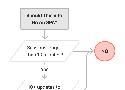
Excellent piece which shows why React (or Angular) is almost always a bad choice and that you'd be better off banking on the underlying web platform. It leads to better user experience full stop. The article also goes in great length debunking the claims which keep React dominant.
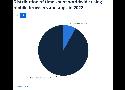
This is definitely true. As long as web frontends are dominated by large frameworks, the web will always have subpar experience on mobile. And the solution isn't going to come from the mobile providers too happy to gatekeep their app store.

This is what you get by making bots spewing text based on statistics without a proper knowledge base behind it.
This is indeed telling unfortunately. It's kind of ironic that they felt the need of having their own debloat scripts.

More signs of the current bubble being about to burst?

People have to realize that tycoons like the ones from big tech companies can both be rich and mediocre. They were smart enough to seize opportunities at the right time but they are not exceptional. In fact, they're even boring and spineless.
The best quote in this paper I think is: "There is nothing special about Elon Musk, Sam Altman, or Mark Zuckerberg. Accepting that requires you to also accept that the world itself is not one that rewards the remarkable, or the brilliant, or the truly incredible, but those who are able to take advantage of opportunities, which in turn leads to the horrible truth that those who often have the most opportunities are some of the most boring and privileged people alive."
The real problem is that lots of journalists can't come to term with the fairy tale and so fall prey to all their publicity stunts as if it had any hidden meaning. This is dangerous because of all the political power they try to seize for their own gains.
Meanwhile, "the most powerful companies enjoy a level of impunity, with their founders asked only the most superficial, softball of questions — and deflecting anything tougher by throwing out dead cats when the situation demands."
Now you can go and read this long piece.

Now the impact seems clear and this is mostly bad news. This reduces the production of public knowledge so everyone looses. Ironically it also means less public knowledge available to train new models. At some point their only venue to fine tune their models will be user profiling which will be private... I've a hard time seeing how we won't end up stuck with another surveillance apparatus providing access to models running on outdated knowledge. This will lock so many behaviors and decisions in place.

Or why we shouldn't trust marketing survey... they definitely confuse perception and actual results. Worse they do it on purpose.

I definitely agree with this. I'm sick of the grand claims around what is essentially a parlor trick. Could we tone down the marketing enough so that we can properly think about making useful products again?
This is clearly less high profile than the Scarlett Johanssen vs OpenAI one. Still this shows it has the potential to become a widespread (even though shady) practice. This might need some regulation fairly soon.
This is a very harsh and bleak view on the current generative AI craze. Clearly it survives on some sort of weird faith that things will magically improve. Some decision makers clearly run fully on said faith and lost all kind of realistic view of the situation. They are just very disconnected from the user's needs.
There's even a funny quote in there: "Generative AI must seem kind of magical when your entire life is either being in a meeting or reading an email".
When this bubble bursts, it's hard to predict what the fallout will be on the tech industry... for sure it won't be pretty. It also begs the question: what is this industry going to do next? There's clearly no plan after generative AI.

Does a good job listing the main myths the marketing around generative AI is built on. Don't fall for the marketing, exert critical thinking and rely on real properties of those systems.
Very nice interview. This is an interesting reflection on the past 20+ years of Agile Software Development.
Interesting series about the rise of the javascript frontend framework, the bad practices which came with them and the very real impacts on the users. There are indeed better ways.
Content creators are clearly annoyed at the lack of consent. The more technical ones are trying to take the matter in their own hands.