
EN: Great interview from one of the designers very involved with Framasoft. She's doing an excellent job at framing what UX design really is and highlighting some of the problems in the Free Software community.
FR: Excellente interview d'une designer très investie dans Framasoft. Elle fait un excellent boulot à expliquer ce qu'est réellement le UX design et à pointer certains des problèmes avec la communauté du Logiciel Libre.



EN: Interesting example (Unsplash as case study) on how simple design changes can greatly impact the ecological footprint of a service.
FR: Exemple intéressant (Unsplash est utilisé comme cas d'étude) où de simples modifications de conception peuvent grandement impacter l'empreinte écologique d'un service.

I almost had tears in my eyes watching this. I think it's amazing to have for the first time such beautiful footage of a rover descent and to see such nice videos of the Mars surface. It's just a great feat from NASA.

This is an interesting approach to ensure at sustainable productivity through the year. It covers different rhythms as it should: daily, weekly, yearly. If you read between the lines you can tell it tries quite hard at keeping stress at bay. I think I'll even try to apply some of that with my own adaptations (it's not strict rules more like guidelines, clearly needs to be adapted to your job, for instance "only" 4 hours of knowledge work per day would feel low in my context).
Obviously didn't read it all but this is a very large knowledge repository of practices from many companies one can get inspired by to work on Site Reliability Engineering. It is especially comprehensive since it's not only about technical tips but also deals with hiring, team building and culture (which is almost as important if not more).
Still a young project but that looks like an interesting approach. At least it would make for much smaller bundles than Electron while still enabling the same type of uses. I still have slight concerns about the complexity involved because of all the layers or how much memory this can consume (akin to Electron). Let's wait and see how it evolves.
Very nice set of tip and tricks for git. Quite a few are probably known to the more advanced users but still there might be one or two for everyone's taste.

EN: Or why our world is more and more looking like a bad dystopian sci-fi movie... EU now funding drone swarms for border control...
FR: Ou pourquoi notre monde ressemble de plus en plus à un mauvais film de science-fiction dystopique... L'Union Européenne finance maintenant des essaims de drones pour contrôler les frontières...

This is an excellent reminder on how the Popperian falsification came to be and how weak it is. More surprising are the ethics and politics ramifications of it and how they got used.
Interesting analysis showing how the M1 SoC from Apple is really a good way for them to close and control their desktop ecosystem even more than before. In my opinion, if you care even one bit about your personal freedom you should likely stay away from this ecosystem.
Looks like an interesting book (didn't read it yet, would love an epub version out of the box) about AI and machine learning.
This new version supports JSON. Looks like learning XSLT wasn't completely a waste then. :-)

Very interesting FOSDEM talk which I see as part of the debate about "Open Source as just licenses"/"Post Open Source". This shows very well how the OSD is very narrow and that their should be a better alignment between what is labelled FOSS and the actual customs. This is something which licenses alone can't capture.
Looking forward to Python 3.10 in October which will finally get pattern matching!
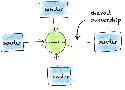
Interesting use of reference_wrapper... I wonder why it didn't occur to me earlier as a good use to deal with ownership like that.
EN: This is a bit of a less rigorous counterpoint of the paper from Nathan Schneider "the tyranny of openness". I think it's interesting to see that despite a few strawmen it reaches a somewhat similar conclusion: it's not just about licenses, it's also about customs".
FR: Un contrepoint moins rigoureux au papier de Nathan Schneider "the tyranny of openness". Je trouve intéressant de voir que malgré quelques "hommes de paille" il arrive à une conclusion un peu similaire: ce n'est pas simplement a propos des licences, c'est aussi à propos des mœurs.

Interesting account on orality vs literacy. Never occurred to me before this article that orality could be written (somewhat Twitter) and that literacy could be spoken (for example news anchors). This is why you sometimes end up with a) people talking like a book or b) people writing like they talk.

You know a thing or two about contributing for FOSS? You'd like that knowledge to be passed on? Here is your chance with that MOOC in development.

Some more example of surveillance capitalism as a mean to social control. Are we surprised? Not really... still they all need to be documented and known to the public.
This is a great paper. Truly mind bending in my opinion. In my case it helped me pinpoint things in the FOSS movement which I felt were there while being unable to clearly explain them. This is a clear enabler and explains why we need to move beyond the "licensing and only licensing" position the FOSS movement is in, it's the only chance to finally encompass ethics and economics which are both very much needed. It's the only chance to converge toward proper commons without the faked meritocracy distortion.
I could go on much longer... but it's not the point here. Go read it!
And if you're still wondering "why not more women in the FOSS movement?" or "why are women mostly in community stewardship roles?", well there are answers for that too.
I'll close with two quotes which I found really important in that paper:
"Ehmke stresses that information ethics and social ethics need not be mutually exclusive but that they should coexist. She frequently celebrates what Open Source has achieved through information freedoms and hopes for more through the addition of social ethics. [...] Yet this evolution means being open in new ways and more closed in others."
""The frame of social provisioning reveals how the unrest in Open Source emerges from a cluster of basic concerns that peer production communities have taught themselves to treat as invisible or inadmissible. It remains to be seen whether Open Source can stretch to incorporate more of its participants’ humanity."