
I think this is the best analysis about GitHub Copilot so far. Clearly using it in production today carries lots of risks. It might improve in the future but only marginally and likely with quite some effort. Not sure it'll pass the threshold to be anything else than a funny toy.


It's a very nice paper on spreadsheets and how we use them. It got enough history in it to make me tick (goes back all the way to the 1300s!). Also it's well balanced, it's not just about blindly blaming tools but looks at their shortcomings but also how we often use the wrong tool for the task... and then end up managing data and knowledge really badly.

Now that looks like a very interesting modular laptop. I'd be interested to test it and would love to see some KDE stuff installed on it by default. ;-)
Nice comprehensive list of the smart pointer types in Rust.
This is a sane approach and a good list of steps for estimating at large scale.

Again, very good (and short) advice about delegation.

Very interesting exploration on software engineering "facts" and what we can really do to increase quality. Unsurprisingly caring for the people seems to be the top factor.
Good set of advice on how to handle and plan for failure when delegating.

Interesting exploration of an easy to introduce memory leak in frontend code.

And a good approach to pick what to delegate.
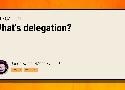
Interesting definition of delegation
Fascinating exploration of our perception of the blue color. Bottom line: our eyes aren't great cameras at all and the brain compensate quite a lot. This together plays against our perception of blue.

The rampant burnout epidemic in software engineering keeps growing apparently. More workload, more impatient stakeholders and less quality... With software being everywhere nowadays this is a huge problem to tackle.
A nice list of interesting nuggets from the functools python module.

Interesting use of mob/ensemble programming to tackle technical debt on projects.

OK, this is actually a very big deal. I think it's the first AAA game 3D engine which gets open sourced. This could be very impactful to the industry.
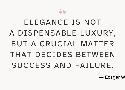
Very good points about why elegance matters in code. It's definitely something I try to keep in mind in code reviews. One has to be careful not to use too obscure features of the language though. For instance, you're mostly fine in Python where what it considered idiomatic is somewhat well defined, you're much more in trouble in C++ which isn't as cohesive.
This is actually a good list. Clearly doesn't try to invalidate YAGNI at all, focuses more on this infrastructure things you need on most projects anyway either for debug purpose or because they allow you to change the system easily later which in fact... supports YAGNI.

Very interesting and insightful point of view... I think this hits the nail on the head: "we talk about conspiracy theories in order to avoid talking about conspiracy practices, which are often too daunting, too threatening, too total".
Interesting approach. Nice to see several coops and non-coops forge an alliance like this for a better all encompassing offering.