I still think there are indeed options that work better than others. They are then best practices... BUT they are very much contextual. Due to that complexity, the "personal preference" labelled as "best practice" is indeed pervasive in our industry.



A good reminder on how science and politics are more intertwined than we'd like to believe. It also shows why trying to have politics determined only by science brings its own set of biases in itself and can only lead to killing any form of debate or compromises.

Now that is indeed an interesting bug. Time can be a fickle friend... arithmetic as well.

This is a good highlight of the differences. It's not "one is best", it is really "pick what is best in your context".
As usual, very good advices on how to delegate. This time about the briefing and feedback parts.
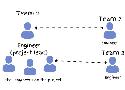
Interesting musing on how different types of companies manage their projects. I'm glad to see there's less cargo-cult Scrum than I expected. I also find funny that Scrum is perceived as "heavy weight". :-D
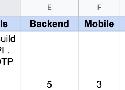
Potentially interesting tricks for estimating. Some of it I did, some not... I guess I'll try some more of what's proposed here at some point.
This sounds like a good approach for optimizing on software durability. Obviously this means you loose other things. This is a trade-off.

Excellent use of inverse-FFT to remove halftone dots in a picture. No need for fancy ML, pure simple math does the job.

Bumped into this, didn't know about their previous experiments. I'm definitely thrilled about this development... I'll try to find more about it, paves the way to interesting little devices. I so damn hate batteries. :-)
A bit of an oversimplification of course... still it's OK since it's on purpose to get the point accross. In any case it's a good way to find out where you stand and where your weaknesses are as a manager.
That's a good list and a good way to approach social media.
Looks like a tiny and nonetheless powerful library for animations in web frontends.

Fascinating attack vector. It was just a matter of time I guess, the more you use blurry frontiers (be it between OSes or other important domains) the more opportunities for exploits show up.
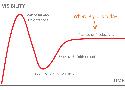
I have to agree there. So long and thanks for the fish I guess.

Mostly about the general approach on how to profile this kind of things. Still a couple of interesting pytest specific tips in here.

Nice way to demystify syscalls in the Linux kernel. It's not that hard to add new ones.
Obviously I strongly agree with this. Participating in code reviews of free software components is a great way to improve. This applies to being a reviewer, submitting code and skimming other reviews.

Nice comics explaining in a simple way how this works.
Interesting description on how the FSF deals with copyright assignments, CLAs, DCOs and the various legal tools needed.