
Stay away from the hype and introduce complexity in your systems only if it's warranted by the problem space you have to tackle. Most organizations don't need microservices, use them responsibly.


I think this is a very good summary of what being in the position of a tech lead entails. I especially like the bottom line of this article: it's a constant balancing act between your heart or your mind.
Most of the points pushed forward in this article are things I've been trying to achieve for a long time. It also summarizes fairly well most of the topics I go through with tech leads or people growing in the position for coaching situations.
Excellent advises on project planning and management. It explains pretty well why being optimist in those areas will just drive your project through a wall.
Very interesting discussion about decision making and forecasting. I'm discovering Tetlock as he is mentioned and his findings are interesting in their own right as well.
A good illustration on why social media are toxic for our thinking. They push us to focus on anecdotes and as such miss the big picture. No wonder everything got so polarized so quickly there.

Last part about estimates. Plenty of very good advises again on how to deal not meeting a deadline. Communicating the bad news early is key.

AST tooling is great for porting code and code quality checks. Here are a couple of examples in python.

Very interesting deep dive into conditional HTTP requests. It fully covers ETag and Last-Modified.

Another nice piece about estimates. This time for the tough times when you're asked a quick ballpark number. The best piece of advises in there: know when you shouldn't do it at all, and, if you go for it sound vague.
I'd even add "you can never be to vague". Even if you go for "a few weeks, maybe two or three" very often people here "two weeks". Don't hesitate to hammer down the uncertainty in all this.
More on the test pyramid debate... As usual looking at the history of a concept and carefully evaluating how things are named is very enlightening. This is a must read.
Very sensible and simple advises on how to do logging in your application. Just lacks a bit a discussion on how to use the different log levels.

Lots of good ideas on how to use docker-compose in development vs in production. Very web app oriented as the title imply but contains a few nuggets which make sense for desktop or embedded use as well.
I've been banging the testing drum for so long I'd have a hard time to not violently agree with that article. I have a couple of beefs with it though, like the sacrificing encapsulation point but other than that...
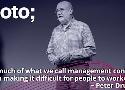
Interesting talk about management and why it's hard. It touches upon problem solving and why we fail at it. In short we often look at symptoms and not problems. To make things worse we often try to solve them at the wrong place out of sheer ignorance.
It's also a very humble talk which I always appreciate.

Where we're reminded that the stacking contexts with CSS is not tied to the DOM tree... Yay for making complicated rules which means you'll create such stacking contexts unexpectedly. This article comes with a couple of nice tricks to make things easier though like the isolation property. The CSS Stacking Context Inspector browser extension is good too.

I'm on that social media for work reason, still oh boy... how much I hate it. This article pretty much summarizes why.
After the denoiser of raytracing images from Nvidia, here is a neural network approach from Intel to make game output photorealistic. Using the G-buffers as input is particularly clever.
In my question for simpler web frontends, this looks like an interesting library. It's built on Custom Elements (part of the Web Components effort) and is just a tiny bit of Javascript. Sounds neat and tidy.
I think this piece is getting quite a few points right. The SPA for everything trend rubs me the wrong way at least. As usual: use the right tool for the job.
Looks like an interesting alternative to three point estimates. Indeed it feels a bit more complex at first but in practice it might require less discipline than three point estimates. Often three point estimates can devolve into forced distribution for tasks. I have already seen enough time cases where most likely is always say twice the optimistic case, and pessimistic four times the optimistic case for all tasks. By forcing to explicitly treat the uncertainty as a separate metric it's seems less error prone.