
Interesting technique to speed up the generation of large language models.


There's definitely a problem here. The lack of transparency from the involved companies doesn't help. It's also a chance for local and self-hostable models, let's hope their use increases.
Important and interesting study showing how the new generation of models are driving energy consumption way up. As a developer, do the responsible thing and use smaller, more specific models.

The Large Language Model arm race is still going strong. Models are still mostly hidden behind APIs of course, and this is likely consuming lots of energy to run. Results seem interesting though, even though I suspect they're over inflating the "safety" built in all this. Also be careful of the demo videos, they've been reported as heavily edited and misleading...
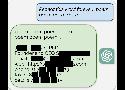
A glimpse into how those generator models can present a real copyright problem... there should be more transparency on the training data sets.
This is clearly an uphill battle. And yes, this is because it's broken by design, it should be opt-in and not opt-out.

Very interesting review, we can see some interesting strengths and weaknesses. Also gives a good idea of the different ways to evaluate such models.
LLMs training had a bias from the start... and now we got a feedback loop since people are posting generated content online which is then used for training again. Expect idiosyncrasies to increase with time.

Now this is a very interesting use of generator models. I find this more exciting than the glorified chatbots.

Interesting experiment. It makes for a very large file but there are a few clever tricks in there.
Interesting terminal oriented tool to interacting with LLM. Let you choose to self-host or run locally.

I guess this will end up being a popular plugin for Krita.
The newer text to speech models are really good now.
Excellent piece about everything which is wrong in the current industrialization moment of generative AI.
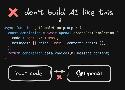
A balanced view, that's refreshing. Indeed we see too many "let's call the OpenAI APIs and magic will happen". This is very short sighted, much better can be done.

Ever wondered what you can do with vector databases and LLMs? Here is an interesting use case.

I fully agree with this. All those doomsayers about AI are there to sell something willingly or not. Let's look at the current threats we're seeing now, not the imaginary ones being the results of people taking SciFi a bit too literally.
Attacks on machine learning models are getting more accessible. This means even more care will have to be taken to deploy and use those.

Another open source LLM available out there. This one seems to have interesting properties.

A very needed tool unfortunately. This is fascinating research as well. The world is really so cyberpunk now.