The title is a bit misleading in a way (and I almost didn't click through for a start). That said, it is an interesting essay dealing with the topics of intelligence, problem solving etc. I'm not sure I agree with everything in it, but that's still good food for thought.


Indeed, if we weaken the learning loop by using coding assistants then we might feel we go faster while we're building up the maintenance cliff. We need to have an understanding of the system.
This is definitely a skill which is hard to teach an learn. When it sticks it brings really nice results though...
An interesting way to approach the topic of GPU programming nowadays. It might indeed make more sense nowadays than reaching for putting pixels on screen as a first objective.

Interesting essay... Indeed not everyone think or learn in the same way or at the same speed. It's not the end of the world though, you tend to develop different strengths or weaknesses due to this.

Interesting talk. The tools presented can indeed go a long way helping people figure out what's wrong with a piece of code or learning some of the harder parts of a language.
I think this is pretty accurate... I have mostly the same reasons.
Looks like a neat way to learn shader programming.
Easy to misunderstand as an elitist stance... But it's not the way I read it. Churning more code faster isn't going to help us, you need to take the time for people to grow and improve. It's not possible to achieve if you're drowning in eager beginners.
Indeed, is it that the language itself has a steep learning curve? Or that the emphasis is on the wrong things in the public discourse? I like the emphasis on the Aliasing Xor Mutability, it looks like a good way to approach the language.
Neat little introduction to use your shell properly.
This is indeed a nice way to setup some new habits on the command line.
Interesting article about expert generalists (also called "paint drip people" by Kent Beck). This is definitely a skill to foster in teams. The article is long enough that I'm not in agreement with everything in it. That being said there's a lot of food for thought here.
Good followup to a similar piece from someone else about React. Frameworks with a short half-life are not worth the hassle to learn, focus on more fundamental skills instead.
This piece is a bit too much written as Rust zealotry for my taste. That being said, there's in my opinion an interesting core truth hidden in there: for now it seems to better foster "expert generalists" when investing in it. Now it might be just for now and might stop later... time will tell.
OK, this is a serious and long paper. It shows quite well how over reliance on ChatGPT during the learning phase on some topics impacts people. It's mesurable both from their behavior and through EEG. Of course, it'd require more such studies with larger groups. Still those early signs are concerning.

More signs of students being harmed in their learning... they get better grades when using gen AI but their skills drop.
This is an important piece of advice. You need to try things for yourself and fail to really learn. I'm not talking about failing in production of course. But trying to break something locally to see how it behaves, reading the errors, etc. is part of learning. This is how you will troubleshoot things faster the next time.
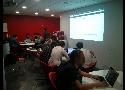
This looks like a really fun workshop. Been wanting to run one for a long time now. Somehow I never had the chance.

A personal experience which led to not using ChatGPT anymore. This kind of validates other papers on cognitive decline, the added value is in how it makes it more personal and concrete.