
Quite some good advice in here. I like being around people who proactively communicate, mind the quality of the communication and look for new things to work on. Who wouldn't?



Or why it's important to deeply understand what you do and what you use. Cranking features and throwing code to the wall until it sticks will never lead to good engineering. Even if it's abstractions all the way, it's for convenience but don't treat them as black boxes.
Interestingly this article draws a parallel with organizations too. Isn't having very siloed teams the same as treating abstractions as black boxes?
Quite some food for thought here.
Even if you use LLMs, make sure you don't depend on them in your workflows. Friction can indeed have value. Also if you're a junior you should probably seldom use them, build your skill and knowledge first... otherwise you'll forever be a beginner and that will bite you hard.

Unsurprisingly, Wikimedia is also badly impacted by the LLM crawlers... That puts access to curated knowledge at risk if the trend continues.
Some powerful bullies want to make the life of editors impossible. Looks like the foundation has the right tools in store to protect those contributors.
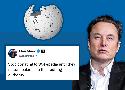
Very good background information on the latest attempt at discrediting Wikipedia.

Very nice piece. This is indeed mostly about building organizational knowledge. If someone leaves a project that person better not be alone to ensure some continuity... lost knowledge is very hard to piece back together.

OK, this is a nice parabole. I admit I enjoyed it.

Indeed, we'll have to relearn "internet hygiene", it is changing quickly now that we prematurely unleashed LLM content on the open web.

I very much agree with this. The relationship between developers and their frameworks is rarely healthy. I think the author misses an important advice though: read the code of your frameworks. When stuck invest sometime stepping into the frameworks with the debugger. Developers too often treat those as a black box.

Very interesting research. Looks like we're slowly moving away from the "language and thinking are intertwined" hypothesis. This is probably the last straw for Chomsky's theory of language. It served us well but neuroscience points that it's time to leave it behind.

Now the impact seems clear and this is mostly bad news. This reduces the production of public knowledge so everyone looses. Ironically it also means less public knowledge available to train new models. At some point their only venue to fine tune their models will be user profiling which will be private... I've a hard time seeing how we won't end up stuck with another surveillance apparatus providing access to models running on outdated knowledge. This will lock so many behaviors and decisions in place.
Very good point. You might not remember the content, but if it impacted the way you think it did its job.
When SEO and generated content meet... this isn't pretty. The amount of good content on the web reduced in the past decade, it looks like we're happily crossing another threshold in mediocrity.
The actual dangers of generative AI. Once the web is flooded with generated content, what will happen to knowledge representation and verifiability?
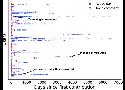
Very interesting study, shows how toxic comments impact contributions. Gives a good idea of the probability for people to leave. In the case of Wikipedia this highlights reasons which contribute to the lack of diversity in the contributors. This is a complex community issue in general, this studies does a good thing by shedding some light on the dynamics in the case of Wikipedia.
Interesting move, I'm wondering how far this will go. Reuse of those functions in other Wikimedia project will be critical to its success.
Looks like an old website, still it does a neat job of explaining how the field of knowledge representation evolved. This is nice to see a reference for beginners since I dabbled quite a bit into this years ago and it wasn't very accessible.
A good reminder on how the "five why" are just a starting pont. For proper investigation and risk management you need to go deeper.

Interesting alternative to the "T-shaped skills" metaphor.