This ecosystem suffers from the same warts and doesn't seem to make any progress... lack of transparency, "we know better" mentality, tight coupling, lack of communication. This is especially problematic for something like a browser.



A sound list of advises, applicable to most database systems of course.
Good reasons to leave indeed. Better host your projects somewhere else.
Nice balanced post on the pros and cons of GraphQL.

Very nice milestone and interesting tech for sure. Congrats to them!

Well, this is a bit obscure but we have to know it's there somehow. Better not rely on it too much though.
Looks like a nice Faker alternative for Java projects. Turns out I was looking for something like that.

Indeed, it's important. You should own your content, you can eventually syndicate on trendy platforms but keep your own base for your own content.
This is an interesting move. There are good reasons for it in this article. Also some I'm less inclined to take at face value but still, worth keeping in mind.
This is a very concerning for C... and it drifts apart from C++ further. The old "C as a subset of C++" position is less and less valid. Very unfortunate.

Lots of nice advices in the followups. The previous article clearly lead to a good conversation around it.
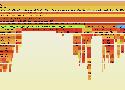
Nice walk through for a use of PyO3 to make some Python code much faster. Nice to see how useful py-spy turn out to be in such scenarii as well.
Note it's not about impostor syndrome, I guess lots of us think we're in this category, that doesn't make it real.
Anyway, from the management point of view this is indeed a baffling situation when you encounter someone like this. What to do? Definitely not always easy, sometimes induced by the organization as well so it would be too easy to blame on the person alone. We need to pay more attention to those and there's clearly no magical recipe to handle them.
Good advice to fight against FOMO as far as reading material is concerned... just pluck things as they pass by. There's so much content there's likely redundancy anyway, hopefully. Yeah... I'm not cured.
There are nice mechanism in the Java type system nowadays to no rely on Optional all the time. This is a good reminder of the main alternative.

This is indeed a phenomenon which I find odd. Everywhere you look, culture seems like it became homogeneous... I don't like this much, but indeed it means it's easy to be distinctive if you want to.

Once again an excellent deep dive... We're getting into the physics of biking, and there are some surprises along the way! In any case this is fascinating all the thinking which went into such an object, the wheels alone are a very clever system.

Clearly aims to demonstrate the superiority of their specialized hardware for training. That said it's nice to have proper open models available (architecture, training data, weights... it's all in the open).
This looks like an interesting new authorization scheme.

Nice (even though a bit long) explanation of the skills needed for a senior software engineers. Definitely a bunch of good advises in there.