Honestly the whole situation was bizarre... And yes it feels like Cloudflare actions were not exactly transparent here.


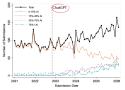
As if research wasn't already having a quality problem in submitted papers... now thanks to people jumping on LLMs to churn out papers faster, this quality is cratering.
Nice exploration of floating point arithmetic all the way down to the silicon.
Still a work in progress, but it'll likely turn out into a nice resource on how to implement regex engines.
Looks like an interesting reference of patterns in software engineering.

We collectively should reach out more to blog authors indeed. Not for kudos but to feed each other through conversations. That's how we collectively learn and improve.

Urgh... That was only a matter of time before they notice I guess. That'll go straight in the authoritarian playbook if they make a real move on it.
Which means simpler models: and this is fine for most use! It's also easier to have more ethical options with the smaller and more specialised models. Let's not forget they exist even though the big industrial complex would like people to forget.
A good reminder of why this is the protocols which matter. People got too accustomed to centralised platforms.
Wondering about NPUs architecture and how they work? This is a good in depth reference article I think.

This is a short one but a good one I think. Helping others to do rather than doing directly is the needed shift to get into technical leadership. It's not an easy leap though, been helping some people getting there and it's quite the effort.
Kind of a rant but it makes sense for the most part. Back end systems could be much simpler than they tend to be. I think this particular piece is willingly ignoring some of the weaknesses in Go error handling though.

Huh! Indeed I'd have fallen in this trap too. Totally unexpected behavior, and of course not all GPUs interpolate the same, so it can stay hidden until too late.
Yep, I like radio as well. Don't judge me.
When you look at the binary representation of those characters, things become clear. This opens the door to interesting bitwise operations.
This feels a bit too realistic for my taste... and yet... Well this piece of satire is well crafted I'd say.

Indeed I wish we'd see less fixation on burndown and velocity. There are superior alternatives and what matters if the full flow of work.

Indeed, there's no reason to not use .well-known for newer standard files.

This is a good point, unlike what some claims the Internet isn't dying. The commercial crap on top is thinning out and is getting filled with crap indeed. Still, what made the Internet and the Web are still here for people to use.

The Internet culture definitely changed at the turn of the 21st century. Before this it was a more civilized and hopeful place. I'd like to see the netizen etiquette make a strong come back.