Interesting article. This is a good introduction to the ActivityPub protocol. It also gives nice flies and pointers on how to dive deeper.



Interesting exploration on the performance of SSDs regarding write patterns. Turns out sequential IO is still a thing, just for a different reason than with good old HDDs.

Clearly inspiring... this project really went from dying to skyrocketing. I'd like to see more of those.

The copyright system is utterly broken at that point. This kind of lawsuits don't make any sense.
This clearly doesn't look as interesting as ActivityPub...
A good reminder that there is life outside of Scrum... I especially like the framing of Scrum as training wheels. When you learned biking you outgrew the training wheels, didn't you?
Looks like a promising way to reduce the training cost of large language models.
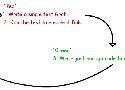
Neat, short and simple post highlighting the important traits of TDD.
Nice poster. It's harder to classify programming languages than it sounds. This one is interesting.

Looks like an interesting tool to try. History is an important part of the shell experience.
This is another way to approach the question of having slack in your schedule. This is necessary, and probably at scale in the organization (as implied by this article).
Interesting ideas in there. It's not enough to pick up that something is off in a conversation. It's better to influence things to defuse the tension. Clearly not that easy to do, will require quite some practice.
Even the giants are slowly moving back from microservices. DHH has a very cruel way to point it out, still that's true. Let's hope people realize the mistake it was in term of complexity.
This is indeed looking more and more like a viable and worthwhile option for web applications.
And yet another set of open source models. This is really democratizing quickly.
Truly open source models are pouring in. This is showing more transparency and I hope it will lead to better uses even though some of the concerns will stay true.

Excellent opinion piece. Sure, "A.I." is a tool, but who is wielding that tool currently? Whom needs is it designed to fulfill? This is currently very much of a problem. The comparison with McKinsey although surprising is an interesting thought.
Also I appreciate the clarification on the Luddites movement... they were not anti-technology.
Very interesting to see that move to owned hardware... turns out that not only the invoice is smaller in their case but the performances are much better as well.

Clearly a bit US centric but interesting trends nonetheless. We might see some of that reaching Europe (for good and for bad) fairly quickly. At least regarding hybrid work, flexible offices and more asynchronous communication, I've seen it globally spread already.
It's a bit a "yet another article" about estimates. Still there are a few good points in there, they're harder to apply than it sounds though.