
Indeed, it's important. You should own your content, you can eventually syndicate on trendy platforms but keep your own base for your own content.


This is an interesting move. There are good reasons for it in this article. Also some I'm less inclined to take at face value but still, worth keeping in mind.
This is a very concerning for C... and it drifts apart from C++ further. The old "C as a subset of C++" position is less and less valid. Very unfortunate.
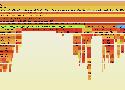
Nice walk through for a use of PyO3 to make some Python code much faster. Nice to see how useful py-spy turn out to be in such scenarii as well.
There are nice mechanism in the Java type system nowadays to no rely on Optional all the time. This is a good reminder of the main alternative.

Clearly aims to demonstrate the superiority of their specialized hardware for training. That said it's nice to have proper open models available (architecture, training data, weights... it's all in the open).
This looks like an interesting new authorization scheme.
Nice (even though a bit long) explanation of the skills needed for a senior software engineers. Definitely a bunch of good advises in there.

Nice historical perspective from Alan Kay about the MVC architecture pattern.
We might start in a software career attracted by the "perfection of the machines" (already debatable) but indeed to make anything meaningful we need to interact with other people. I often say it but I'll say it again: it is a team sport.

Indeed, this is the most important skill we need next to coding. Especially in a remote work culture.
Now this is a truly impressive technology! This will make facial motion capture a really smoother process.
Interesting musing about a language size and how it evolves over time. There's clearly tension between making it too big and keeping it relevant to modern uses.
Now, this starts to become interesting. This is a first example of trying to plug symbolic and sub-symbolic approaches together in the wild. This highlights some limitations of this particular (quite a bit rough) approach, we'll see how far that can go before another finer approach is needed.
How surprising, did they realize this was one more fad they were helping to fuel?
Interesting algorithm for generating image placeholders.

Training sets are obviously already contaminated... now it'll be a race of hiding such mistake under the carpet with human interventions. That'll be a boon for misinformation. That's what we get for a useless large models arm race.

Nice refactoring and design pattern catalogs.
It's clearly way too reliable. This needs explicit hardening.
This is a very good point, it's good to reduce containers size. Be careful of the cost though.