I didn't read it since it's basically a whole book. Still from the outline it looks like a very good resource for beginners or to dog deeper on some lower level topics.


If you're still using Chrome, maybe you shouldn't... They're clearly making it easier to overcome ad blocker and the tracking won't be a third party thing anymore, this browser will directly report on your behavior.
Good list of things to keep in mind when thinking about performances. Of course, always measure using a profiler when you want to be really sure.
More details are surfacing regarding async and Rust... definitely not a match in heaven it seems.
Interesting way to approximate how loaded a system is.
Really cool and fun experiment. Surprisingly relaxing I find.
Interesting tale and exploration on how a change in includes impacted cache misses. This is sneaky (and solved with more recent compilers).
Clearly a list of concerns to keep an eye on for wider Matrix adoption. Clearly some basics are not covered still.

It's too often forgotten how much our culture is fragile. So many digital artifacts which could just vanish or not be readable anymore years from now.

Like it or not but PHP is indeed here to stay.

Some progress, still a long way to go.
Definitely this, the message is often coming across lacking nuance. TDD can help you towards good design, but it's not ensuring you'll have a good design.
This is really bad... it's way worse than I suspected. The car makers really need to change their practices. Go and sign the petition.
Indeed, these confusions are widespread. Even worse, they generally lead you away from actual productivity.

Newer language really have a hard time moving up in this ranking. Lots of inertia all around.
This is indeed a good thing to hide dependencies behind interfaces when it makes sense.
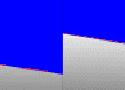
What's worse than a compiler bug? A processor one... very interesting deep dive in this particularly nasty one.
Interesting look at the challenges ahead for the fediverse. Not easy since some of this is cultural clash, some of it is technical and solvable though.
I think I'd have gone further in the past for such a thought experiment... still if you wonder why people are fighting for digital freedom, here is why.
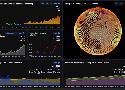
Very welcome tool, well done as well.