
There's really something nasty at play. Those coding agents are clearly not insulated from the system enough and to easy to manipulate to exfiltrate sensitive information.



Queues are not magic. If they're unbounded you're in for a world of pain as load increases.
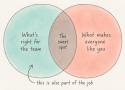
Sometimes, you got to deliver the bad news... It's healthy if you feel uneasy about it though.
Indeed, when people say "users don't care about quality" (tests or otherwise), this is mostly folklore. As soon as something goes wrong they'll care.
Very nice piece, timely and needed. Indeed, let's hope people stick to those principles.
A good primer on the main architecture traits of transformer models.
More an experiment than something I'd recommend for real. Still it shows there's a gap we need to close in the licenses available. Let's hope the OSI and the FSF will do strong moves toward closing this gap.
There's a path to get people (children included) to get into technology with enough of the veneer of convenience to make sure it is a learning experience... While keeping it pleasurable.
Indeed the trend wasn't new. It's "just" the icing on the cake from the enclosure point of view.

The C++ Standard Library Has Been Walking Itself Back for Fifteen Years, and the Receipts Are Public
Cold and harsh look at how the C++ standard library evolves. There's indeed a problem in the fact that nothing gets removed ever.
Some of the examples lean on macro trickery. Still this gives a good example of the flexibility you get with the trait system.

Things which matter take time. The calls to productivity and technology pushing us toward faster response on everything is killing what makes our humanity.
Good primer on systemd timers. Indeed it's really one of the nice systemd features.

Mind those traps when dealing with such a database. There are locks you don't necessarily expect.
Indeed, if the rsync maintainer can't handle a coding assistant properly... who can?
Good summary of how the terms evolved. They are more tied to each other than most people think.
There was an era of hybrid techniques in video games before it mostly went full real-time 3D. It gave interesting results, here is an example.
Good point, disabling asserts in production is not the best default position to have.
When Amnesty International feels like it has to publish a 44 pages briefing pointing out what's wrong with your approach and business... it'd be nice to pay attention.
Indeed, teams reach out to Yocto by default a bit too much. It's good to have an idea on when you really needed and when you can go for simpler options.