
Like me, you find the Open Source AI Definition weak on the training data information side? You'd be right and there's a reason for it... it's probably hiding quite some open washing for the larger models. This is a good explanation of the motives and consequences.


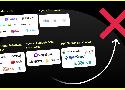
I definitely like the approach of having vectorisation in the RDBMS directly. This is one less moving part, less complexity at the application level to synchronize everything together. In this case it's a Postgres extension.
Nice initiative from the OSI. It is timely, such a definition was surely needed. The data information part seems fairly weak though... for sure you could make a system which doesn't respect the four freedoms that way.

This is what you get by making bots spewing text based on statistics without a proper knowledge base behind it.

More marketing announcement than real research paper. Still it's nice to see smaller models being optimized to run on mobile devices. This will get interesting when it's all local first and coupled to symbolic approaches.

This is still an important step with LLM. It's not because the models are huge that tokenizers disappeared or that you don't need to clean up your data.
Using the right metaphors will definitely help with the conversation in our industry around AI. This proposal is an interesting one.

More signs of the current bubble being about to burst?
Now this is an interesting paper. Neurosymbolic approaches are starting to go somewhere now. This is definitely helped by the NLP abilities of LLMs (which should be used only for that). The natural language to Prolog idea makes sense, now it needs to be more reliable. I'd be curious to know how many times the multiple-try path is exercised (the paper doesn't quite focus on that). More research is required obviously.

Now the impact seems clear and this is mostly bad news. This reduces the production of public knowledge so everyone looses. Ironically it also means less public knowledge available to train new models. At some point their only venue to fine tune their models will be user profiling which will be private... I've a hard time seeing how we won't end up stuck with another surveillance apparatus providing access to models running on outdated knowledge. This will lock so many behaviors and decisions in place.
Finally a path forward for logic programming? An opportunity to evolve beyond Prolog and its variants? Good food for thought.

Of course I recommend reading the actual research paper. This article is a good summary of the consequences though. LLMs definitely can't be trusted with formal reasoning including basic maths. This is a flaw in the way they are built, the bath forward is likely merging symbolic and sub-symbolic approaches.

Indeed, we should stop listening to such people who are basically pushing fantasies in order to raise more money.
OK, this paper picked my curiosity. The limitations of the experiments makes me wonder if some threshold effects aren't ignored. Still this is a good indication that the question is worth pursuing further.
How shocking! This was all hype? Not surprised since we've seen the referenced papers before, but put all together it makes things really clear.

The arm race is still on-going at a furious pace. Still wondering how messy it will be when this bubble bursts.

Doxxing will get easier and easier. Con men are likely paying attention.
Good article about the ethical implications of using AI in systems. I like the distinction about assistive vs automated. It's not perfect as it underestimates the "asleep at the steering wheel" effects, but this is a good starting point.
If you run the number, we actually can't afford this kind of generative AI arm race. It's completely unsustainable both for training and during use...

This is a short article summarizing a research paper at the surface level. It is clearly the last nail in the coffin for the generative AI grand marketing claims. Of course, I recommend reading the actual research paper (link at the end) but if you prefer this very short form, here it is. It's clearly time to go back to the initial goals of the AI field: understanding cognition. The latest industrial trends tend to confuse too much the map with the territory.