
Good point on why you don't want to drive your organization simply on RFCs. Yet another fad of "this worked for them, let's do it as well"... per usual this fails to take into account the specificity of the context where it worked.


LLMs training had a bias from the start... and now we got a feedback loop since people are posting generated content online which is then used for training again. Expect idiosyncrasies to increase with time.

Now this is a very interesting use of generator models. I find this more exciting than the glorified chatbots.
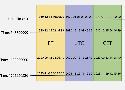
Good reminder that the raw UNIX timestamps have interesting properties and often are enough not necessarily needing to rely on something more complex. Also gives nice criteria for picking between said timestamps and higher level types.

Interesting food for thought. The later point about the tension between business and users lately is also a good one and should be kept in mind. That's an ethical concern you find most in companies publishing Free Software though. It's not the full packaged solution but a good starting point.

Definitely a weird one... still a mystery and unfortunately will probably stay this way. Having the code source could have helped nail it down, could have been interesting.

Good things to keep in mind if you're pondering between pandas or polars for your data processing.

There was definitely something we lost from the early days of the web. It was not perfect, far from it, but some of that spark is missing.

Interesting experiment. It makes for a very large file but there are a few clever tricks in there.
Interesting terminal oriented tool to interacting with LLM. Let you choose to self-host or run locally.

The best time to test it and provide fixes is now!
If you wonder what's happening on the JIT front in CPython land, here is a talk explaining what's coming in 3.13.

Looks like a fairly comprehensive course to get started or refresh your Modern C++
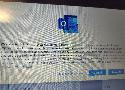
They respect privacy apparently... oh wait!

The beginning of the end for X11. The writing is now on the wall.

Definitely this. When polling the questions shouldn't be too obvious, otherwise people will tell you what you want to hear.

Another great release. Definitely welcome features.
Hopefully this becomes true. I wouldn't mind a post-Social Media era of the Web.

I keep being baffled at how the right type of noise can really make a difference in the rendering of some effects.

This is an important project, they're starting a crowdfunding. Time to give back!