
Looks like Meta is moving forward with more ActivityPub compatibility for Threads. This raises real questions about what they genuinely want to implement and what they'll abandon along the way.


The actual dangers of generative AI. Once the web is flooded with generated content, what will happen to knowledge representation and verifiability?
It might not be as clear cut as sometimes assumed. With the right index UUIDv4 can still do as key in databases.
An old post, but very much true... People who really know C++ have stared the abyss in the eye, and you can tell.
Ever wondered how ELF and ld.so work? This is a good primer on the topic with a few OpenBSD specifics.
An exploration of how databases work from first principles, going all the way to distributed nodes etc. Good list of topics to explore further.

This is an easy mistake to make. I'd say the API isn't helping there either, there's an improvement to find in Cap'n'proto to make it safer.

Fascinating article explaining how some Lego sets are designed.

This is an impressive piece about decision making and leadership. I love the approach: seeking to get the decision out of the person instead of deciding for them.

There's definitely a problem here. The lack of transparency from the involved companies doesn't help. It's also a chance for local and self-hostable models, let's hope their use increases.

What's cooking up for the next generation of peer-to-peer applications? Here are two exciting examples of building blocks which are in the works.

Definitely the right move, more extensions are pouring in. People should benefit from them on Android as well.

Interesting deep dive about how network stacks work in kernel or in user land. Also provides some insight on how to improve the kernel stack.
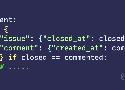
Nice illustration on how pattern matching can simplify code and make it easier to write.
This would indeed be a nice path forward for HTML. It's much too dominated by JavaScript for now, having standardized semantic extensibility would be just better.

Interesting survey results. This kind of confirm what we already suspected regarding longer work day and the amount of meetings.

There will be an appeal but this is an important ruling already.
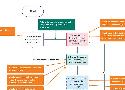
This is apparently a much needed clarification. Let's get back to basics.
Probably the definitive resource on how floating-point arithmetic works.
Important and interesting study showing how the new generation of models are driving energy consumption way up. As a developer, do the responsible thing and use smaller, more specific models.