
Little simple benchmark of WebAssembly performances for the most common languages found there. Careful to the payload size though.


Definitely this, we have to stop pointing disk I/O so much for performance issues. This is just not really slow anymore. Obviously network is a different story.
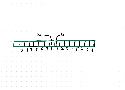
Nice summary on the false sharing problem with caches and how it can impact your performances in multithreaded contexts.
Interesting deep dive on how sets and dicts are implemented in CPython. There are a couple of interesting tricks in there.
There are indeed a few architectural problems with the Fediverse as it is. Can this be solved? Hopefully yes.
Interesting take about how performance optimizations can sometimes leverage even more performance gains than you would expect.
Good reminder that "premature" doesn't mean "early". Poor Knuth is so often badly quoted in the context of optimization that it's really sad. The number of times I see "early pessimisation" on the pretense of avoiding "premature optimization". Such a waste...

This is good news, this provide more venues for improving performances in Python modules next to switching to compiled Rust with something like PyO3. There's clearly a case to be more for not having to rewrite when the codebase was already mostly Python.
This has some interesting promises in terms of performance using Python. Looks a bit like a CUDA for Python... to be seen how it fares in practice.
Let's put this quote back in its context, shall we?
One of the best developer tools around for analysis and profiling. I'm glad it exists, saved me a few times.
Wow, this is a very good exploration of the performances of several common languages and runtimes. This is one of the most thorough I've seen. A good resource for deciding what to pick.

And this is why you likely need to optimize your data pipelines at some point. There are plenty of levers available.

Excellent deepdive about pipes, on the path to optimization we see how perf is used, how memory is managed by the kernel etc. Very thorough.
Debatable "feature", bad implementation, dubious community handling... Clearly not a good example to follow from the Go space.
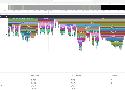
This looks like a very interesting tracing tool for debugging and profiling purposes.
That looks like a very interesting tool for larger Python based projects. Definitely need a way to profile memory use in there.
Oh this is really neat! This is a good way to visualize how it evolved over time, I find the period starting in 2005 especially interesting.
Really cool optimizations for B-Trees. Once the layout is reworked this is a neat way to use SIMD as well.

Interesting use of WebAssembly for fast and very portable code. Also especially interesting is the care in the move to the new software architecture.