Interesting trick to detect table scans with SQLite. I can see that useful in development to optimize systems.


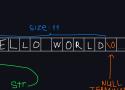
Indeed, this design choice comes with lots of issues. It might have made more sense in the 70s though.

C++23 gives us std::ranges::view::enumerate for this particular case now. Still, this is a good illustration of the (too) little used range-based for loop with initializer.

Or how to properly paginate results when you have a database.
An illustration of the political and ethical acumen being low in our profession in general and in some (most?) Open Source projects in particular...
What's in the physics simulation of cars? A lot actually!
More latency exploration on Linux for games. The results are interesting. Unsurprisingly the X11 vs Wayland difference is much less dramatic than what people make of it.

Those systems based on LLMs really create crazy security issues as soon as they're allowed to interact with other systems.

What's in a request nowadays? Well, lot of information!

There's clearly an issue with the security and privacy practice of those companies...

Some of it is probably a bit too cynical (often the case with this author), and yet it has good advice on how software engineers influence the organisation around them.
A neat and simple explanation of what CORS is and which security issues it helps with.
Another fun exploration of dithering techniques. The variety abounds in this domain I think.
It's definitely bringing nice moves now. It deserves to be used more indeed.
Nifty new approach for infinite terrain generation. This is really impressive work.
Good check list of things to consider when you're delegating something. It's pretty much the expectations from the person who delegate to you.
I wish more teams would have this kind of thinking an really carry it to its logical conclusion. In most case you don't need an SPA framework.
If you ever wondered what is responsible for printing the "core dumped" message, here is your answer.
Well yes... and hopefully the fashion industry won't be enough to hide it.
Not what I signed up for years ago, but it's the political and social landscape we inherited... Surveillance is being on steroids now, so definitely need to fight it at every turn.